Naive Summer Flowers: Whimsical Clipart for Modern Design
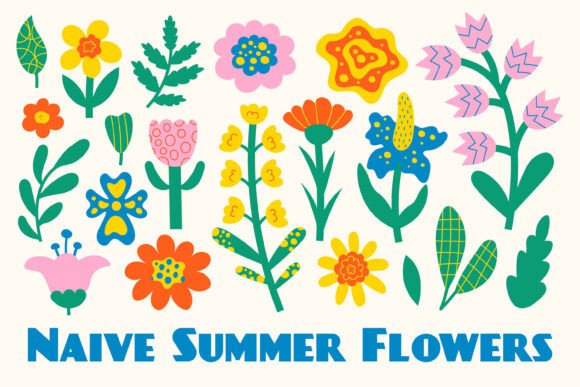
There’s something undeniably fresh about a design that feels both handcrafted and intentionally simple. In a visual landscape often crowded with hyper-realistic renders and complex gradients, the return to naive, hand-drawn aesthetics offers a breath of fresh air. This is precisely the appeal of the Naive Summer Flowers PNG Clipart set—a collection that doesn’t just replicate nature, but interprets it through a lens of playful minimalism and textured charm. It’s not about perfect botanical accuracy; it’s about capturing the feeling of a sun-drenched meadow with bold shapes, vibrant colors, and a distinctly contemporary twist.
The Allure of Hand-Drawn Simplicity
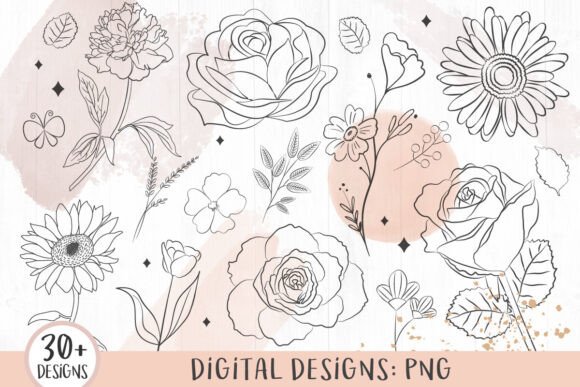
What makes this particular set of floral elements so visually compelling? It lies in the deliberate balance between naivety and sophistication. Each tulip, chamomile blossom, and wildflower branch is rendered with a confident, almost childlike line, yet the overall effect is deeply polished. The textures are bold and tactile—you can almost feel the grain of the paper or the stroke of the brush. Colors are vibrant but not overwhelming, chosen to harmonize in a way that feels joyful and cohesive. This style bridges the gap between rustic charm and modern graphic design, making it incredibly versatile. It avoids the clichés of either overly ornate vintage florals or sterile, generic vectors, offering instead a voice that is both personal and professional.
Practical Applications for Your Creative Projects
For the designer or entrepreneur, the true value of an asset like this lies in its application. This isn’t just a decorative kit; it’s a toolkit for building a visual language. Consider how these elements can transform various projects:
- Branding & Packaging: For a boutique skincare brand, a local florist, or a specialty tea company, these illustrations can become the cornerstone of a brand identity. Use a single, striking blossom as a focal point on a label, or create a repeating pattern from the leaves and branches for wrapping paper or box interiors. The naive style communicates authenticity, creativity, and a hands-on approach that resonates with consumers seeking genuine products.
- Digital & Print Marketing: Social media graphics come alive with these layered elements. Create engaging Instagram Stories by having a flower “grow” across frames, or design eye-catching Pinterest pins for a blog post about summer recipes or garden parties. For print, they elevate simple flyers, menu designs for a café, or direct mail postcards, adding a burst of personality that generic stock art cannot match.
- Invitations & Stationery: Wedding suites, baby shower invites, or birthday cards benefit immensely from this whimsical touch. The collage-style bundle allows you to build unique compositions for each piece, ensuring no two invitations look exactly alike while maintaining a cohesive theme. The transparent PNGs make layering over textured backgrounds or pairing with elegant script fonts a seamless process.
- Editorial & Digital Content: Bloggers and content creators can use these florals to break up text-heavy layouts, create custom featured images, or design unique chapter headings for an e-book. For a nature-inspired journal or digital planner, the elements can be used as decorative stickers, section dividers, or beautiful accents for monthly spreads.
Enhancing Visual Consistency and Professionalism
A well-curated set of design assets does more than decorate; it systemizes. By using the same collection of Naive Summer Flowers across multiple touchpoints, you build a recognizable visual thread. A customer should be able to spot your Instagram post, your website banner, and your product packaging and feel an immediate connection. This consistency is foundational to brand recognition. The high-resolution (300 dpi) and large dimensions (5000 x 5000 px) of these files ensure that whether you’re designing a tiny favicon or a large-format poster, the quality remains crisp and professional. This eliminates the common frustration of pixelation or blurry edges that can undermine an otherwise strong design.
Working with Texture and Color
The textured, hand-drawn quality of these florals is a key feature. When incorporating them, consider the background and supporting typography. A clean, sans-serif font often provides the perfect counterbalance, letting the organic shapes of the flowers stand out without competition. Alternatively, a complementary script font can enhance the whimsical, personal feel. The color palette within the set is designed to work together, but don’t be afraid to adjust hues slightly in your design software to match your brand’s specific color scheme. The vibrant yet harmonious colors are meant to be a starting point, inviting customization.
Choosing Your Final Compositions
With 20 PNG elements, 20 JPGs, and an EPS file containing the entire collection, the creative possibilities are vast. The EPS file is particularly valuable for advanced users who may want to scale elements without quality loss or edit paths directly in vector software. For most projects, the transparent PNGs will be your go-to, allowing for effortless drag-and-drop layering. The JPGs with white backgrounds are perfect for quick mockups or printing on white surfaces. Before finalizing a design, test how different combinations of flowers, leaves, and branches interact. Sometimes a single blossom paired with a delicate leaf is more powerful than a dense bouquet. The goal is to create compositions that feel balanced, intentional, and full of life—much like a perfect summer day.